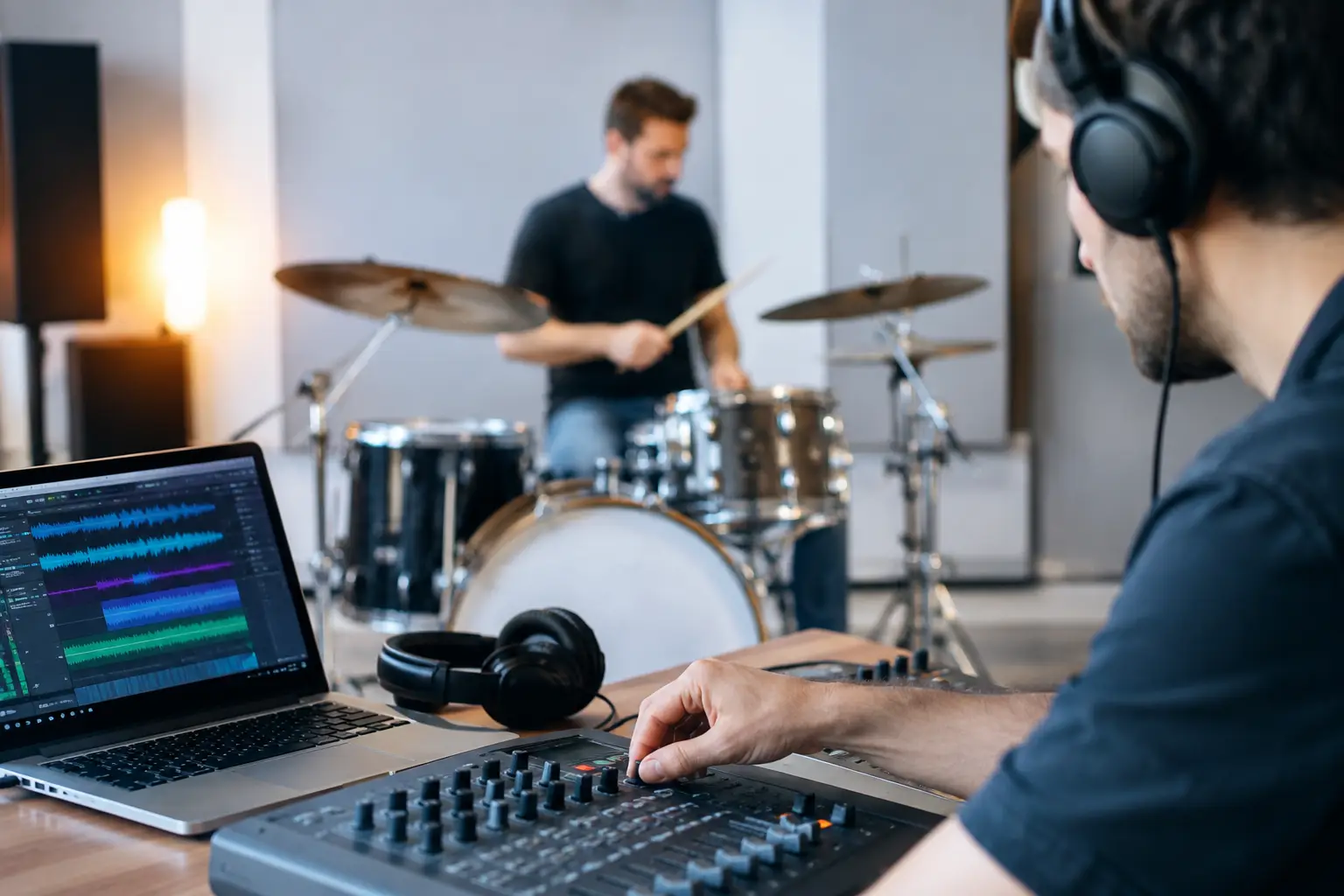
A transition can be perfectly beatmatched at the start and still fall apart 16 bars later. When a recording genuinely changes tempo, you are not dealing with two fixed grids. You are mixing moving performances, so the goal shifts from permanent lock to a transition that feels intentional.
This comes up with disco, funk, soul, classic house, live recordings, edits taken from bands, and DJ-friendly tracks that speed up slightly into a chorus. It also appears when a drummer pushes the beat for energy, relaxes into a breakdown, or follows the feel of other musicians rather than a click track. None of that is bad timing. It just asks for a different DJ approach.
First, identify what is actually moving
Not every track that appears to drift has changing tempo. A bad beatgrid, a mislabeled BPM, a half- or double-time reading, or a loose intro can create the same symptom. Before changing your mixing technique, listen to the main body of the record.
Set a cue on a clear downbeat near the beginning, then compare later downbeats across several phrases. Diagnose the pattern before adding tempo markers:
- A constant offset: align the first downbeat or move the grid without changing its BPM.
- An offset that grows steadily: check the constant grid BPM first. Two perfectly steady tempos still drift if their BPM values differ.
- An offset that changes unevenly or reverses direction: check several sections by ear; the recording may have genuine tempo changes and need a flexible grid.
If the grid remains accurate through the main section but misses only the intro, outro, or a short fill, correct those local points. Steady drift alone does not prove the drummer changed tempo. The Serato beatgrid guide explains the distinction between shifting a grid, adjusting its BPM and marking tempo changes.
A difference of even 0.2 BPM matters over a long blend. At 120 BPM, one beat lasts 500 milliseconds. A small tempo mismatch may be hard to hear in the first phrase, then become an obvious flam between kicks after a minute. With a live drummer, the difference may also change direction: the band may rush toward a chorus, then settle back afterward.
Treat the displayed BPM as an average, not a promise. BeatTiming's tap-tempo tool can help estimate the tempo of several separate sections when a track has no reliable BPM information, but manual tapping does not analyze the recording or replace listening for drift.
How to mix tracks with changing tempo
The most reliable method is to shorten the section where both full drum patterns play. Rather than trying to hold a two-minute house-style blend, line up the incoming track at the start of a phrase, let the transition do its job, and move attention away from the competing rhythms before drift becomes distracting.
Mix by phrase, not just by beat
Start with the musical structure. In dance music, transitions often work in blocks of 8, 16, or 32 bars. In band-based material, the arrangement may be less regular, but verses, choruses, fills, and breaks still provide useful landmarks.
Bring the incoming track in on a meaningful downbeat, usually the first beat of a new phrase. Keep the kick or snare relationship clean for eight or 16 bars, then reduce one track's low end, use an instrumental break, or complete the swap. You are giving listeners a coherent handoff, not proving that both recordings can run together indefinitely.
For example, imagine moving from a 118 BPM disco record with a drummer to a 120 BPM electronic track. You might match the opening downbeat, blend percussion for eight bars, introduce the new bassline over the next eight, then fully remove the disco record at the chorus or before its drift becomes audible. If the source speeds up through the chorus, leave earlier rather than fighting the pitch control through the most exposed moment.
Use the jog wheel or pitch control as ongoing correction
Sync is useful when the software has a well-prepared flexible grid, but it is not a substitute for attention. When the source is played by a drummer, expect to make small nudges throughout the overlap.
A gentle jog-wheel nudge corrects where the beats are landing right now. A small pitch adjustment corrects the rate at which they will continue to separate. Use the first for a brief push or drag; use the second when you hear a consistent trend over several beats.
Avoid large, repeated corrections. They can make percussion sound nervous and can be more noticeable than a little natural looseness. If you need to touch the platter every bar, the overlap is too long or the records are not compatible for that kind of transition.
Choose a transition that hides the handoff
EQ is often more effective than tighter beatmatching. Two live drum kits, or a drum kit and a programmed kick, can clash even when their tempos are exact. Their low frequencies, transient shapes, and swing may compete.
Bring in the new track with its bass reduced, especially if both tracks have strong kicks. Exchange the low end at a phrase boundary rather than leaving both basslines active. A high-pass filter can also clear room during a short blend, though too much filtering can make the transition feel thin.
If the tempos are moving apart quickly, use a musical exit: an echo on the outgoing vocal, a reverb tail, a looped percussion fill, or a break with less rhythmic information. These are arrangement choices, not emergency effects. The cleanest option is often a cut on the one, followed by the incoming track's strongest downbeat.
Prepare beatgrids for flexible tempo
Modern DJ software handles variable tempo differently, but the principle is the same: give the software accurate reference points across the song rather than forcing one straight grid onto an elastic performance.
Place grid markers on unmistakable downbeats - typically the first kick of a phrase, a snare-led entry, or the start of a chorus. Check them at several points through the track. If the software supports flexible, dynamic, or multiple tempo markers, use them where the tempo genuinely changes. Do not add markers to every beat unless the music is so loose that you need them for a specific routine. Dense editing can make later corrections harder to understand.
For tracks with a drummer, grid the sections you intend to use. A clean 32-bar intro and an accurate chorus may matter more than a perfectly mapped middle verse you will never play. Add cue points at phrase starts and at safe exits. Labeling a cue such as “leave before chorus” can prevent an overlong blend in a busy set.
There is a trade-off. Detailed grids improve sync, looping, and beat-jump accuracy, but they do not make a human performance mechanically constant. If the drummer changes feel within a bar, a visual grid can tempt you to ignore what you hear. Headphones and the dance floor still get the final say.
When manual beatmatching is the better choice
Manual beatmatching can be faster when a track has gentle drift but no dramatic tempo changes. Start by matching the average tempo, use the pitch fader to get close, and make short positional corrections as the records play. This preserves the performance's natural movement without continually rebuilding the grid.
It is especially useful for older disco and funk. Those records can have subtle push and pull that feels great on their own but looks untidy against digital waveform lines. Matching the groove for a phrase is often enough. Trying to force every kick into the exact center can remove the relaxed feel that made you select the track.
That said, manual control is not automatically more musical. If an edit has a planned tempo ramp, a well-prepared dynamic grid may let you concentrate on selection, EQ, and phrasing. Use the method that leaves you with the most attention for the room.
Mixing a live drummer into electronic music
The hardest pairing is usually a live drum recording against rigid electronic drums. The issue is not only tempo. A drummer may play slightly behind the beat while a programmed kick is centered exactly on it, creating a flam even when both parts share the same average BPM.
Give each rhythm a role. Let the electronic track provide the kick while the live record contributes hats, percussion, or a vocal for a short phrase. Or do the reverse: reduce the incoming track to melody and texture until the live track exits. Do not assume that two full drum patterns need to coexist.
Swing matters too. If the electronic track has straight 16th notes and the band plays a pronounced shuffle, a long layered blend may sound awkward at any tempo. A shorter transition, a breakdown, or a cut between phrases will usually feel more confident.
A practical rehearsal routine
Record a few transitions in practice and listen away from the decks. Mark the first moment you hear the beats separating, then count backward to find the last clean phrase boundary. That is your realistic blend length for that pair of tracks.
Try three versions: a short eight-bar overlap, a 16-bar EQ swap, and a transition that uses a break or echo exit. The best choice depends on arrangement and energy, not on which technique looks most technical. Once you know where a record begins to drift, you can make the change before the listener notices the problem.
A live drummer does not make a track difficult to DJ. It gives the track motion. Plan the handoff around that motion, keep the shared drum section as long as it sounds good, and let the next phrase tell you when it is time to move on.